 (844) 230-7676
 Language

New York Labor Law Attorneys
We are ready to do everything in our power to achieve RESULTS for you.

We are ready to do everything in our power to achieve RESULTS for you.

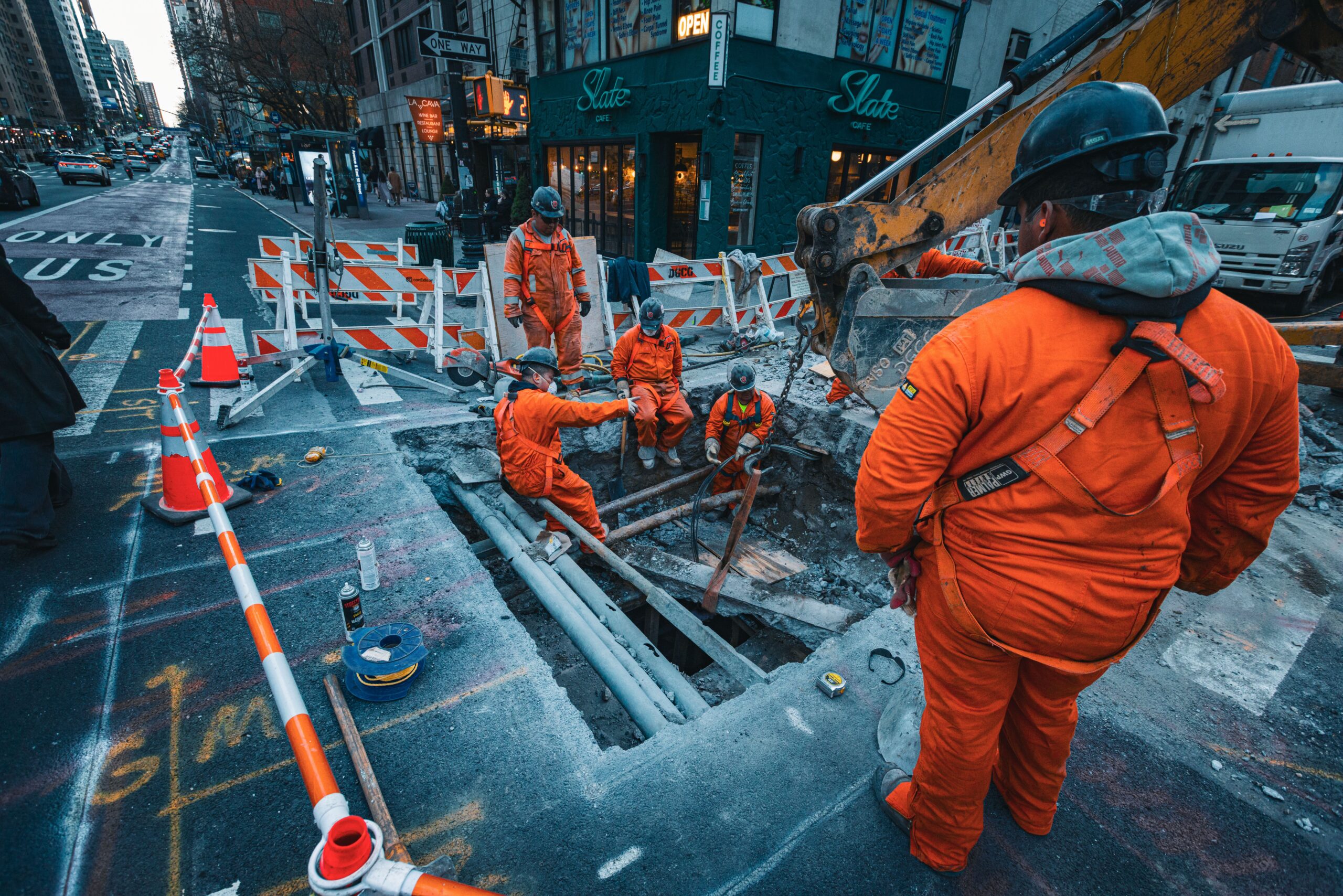
Construction accidents remain one of the leading causes of serious workplace injuries and fatalities in New York. From falling objects and scaffold collapses to power tool injuries and electrical accidents, construction workers face significant risks every day. Understanding the most common construction accident causes can help workers recognize hazards, protect their rights, and determine what legal options may be available after an injury.
Construction accident claims are legally complex in New York. Depending on the facts, victims may file workers’ compensation claims, negligence claims, or strict liability claims.
Workers’ compensation provides no-fault benefits which take care of economic losses. These victims only need to prove that the injury is work-related. In many cases, injured workers may qualify for workers' compensation benefits regardless of who caused the accident. Depending on the circumstances, additional claims against contractors, property owners, or third parties may also be available under New York law. Negligence claims are appropriate if the construction company was one of the many firms in New York that do not have workers’ compensation insurance. Unlike negligence claims, strict liability claims under certain New York Labor Laws do not require injured workers to prove that a property owner or contractor acted carelessly. Instead, liability may arise when a violation of the law contributes to a gravity-related construction accident, such as a fall from a height or an injury caused by a falling object.
Our New York personal injury attorneys are experienced in all three kinds of cases. So, regardless of the facts, we fight for fair compensation.
Falling objects are one of the most serious hazards on construction sites, posing significant risks to both workers and people nearby. There is an old story that a penny dropped from the top of the Empire State Building could be fatal to someone on the street. While that myth is largely false because the penny would flutter as it falls, it illustrates an important principle of physics: the further an object falls, the greater the speed and force it can generate upon impact. Construction tools, building materials, and debris are far heavier than a penny, making them capable of causing catastrophic or fatal injuries when proper overhead and ground-level protection is not in place.
The Occupational Safety and Health Administration (OSHA) consistently identifies struck-by incidents as one of the "Fatal Four" leading causes of construction worker fatalities nationwide. Unsecured tools, improperly stored materials, falling debris, and inadequate barricades or overhead protection can all contribute to preventable accidents.
When a falling object injures a construction worker, workers' compensation typically provides benefits for medical expenses and lost wages, regardless of who was at fault. However, additional legal claims may also be available depending on the circumstances. If the injured person was a pedestrian, visitor, delivery driver, or another non-employee, they may be able to pursue a negligence claim against the responsible parties. To succeed in a negligence claim, the injured party must show that a property owner, contractor, or another responsible entity failed to exercise reasonable care and that failure caused the injury. In certain gravity-related accidents, injured workers may also have claims under New York Labor Law § 240(1), which provides important protections when falling objects contribute to a construction site injury.
Falls from elevated work areas remain the leading cause of fatal construction accidents in the United States. The Occupational Safety and Health Administration (OSHA) requires employers to provide proper fall protection for employees working on scaffolds, ladders, roofs, aerial lifts, and other elevated surfaces. When these safety measures are missing or inadequate, workers face a significantly higher risk of suffering catastrophic or fatal injuries.
Scaffolds are an essential part of nearly every construction project, from single-family homes to high-rise developments like the 73-story One Vanderbilt skyscraper in New York City. Large-scale projects also rely on construction cranes, which become increasingly
hazardous at greater heights due to high winds, suspended loads, and complex lifting operations. Without proper guardrails, personal fall arrest systems, secure scaffolding, and routine safety inspections, even a single mistake can result in a life-changing accident.
New York provides some of the strongest legal protections for injured construction workers through Labor Law § 240(1), commonly known as the Scaffold Law. Enacted in the late 1800s, it remains the only law of its kind in the United States. The law imposes strict liability on property owners and general contractors when a worker is injured in a gravity-related accident involving a fall from a height or a falling object because adequate safety devices were not provided.
Unlike a negligence claim, a worker pursuing a claim under the Scaffold Law does not have to prove that a property owner or contractor acted carelessly. Likewise, an employer cannot avoid liability simply by arguing that the injured worker was partially at fault or that certain safety measures were in place. When Labor Law § 240(1) applies, injured workers may be entitled to recover compensation for both economic damages, including medical expenses and lost wages, and noneconomic damages such as pain and suffering, emotional distress, and loss of enjoyment of life.
Construction sites are fast-paced environments where tools, materials, equipment, and debris are constantly being moved. While some level of clutter may be unavoidable, poor housekeeping and improperly stored materials can quickly create dangerous tripping hazards. Exposed cords, loose building materials, uneven walking surfaces, wet areas, and scattered debris all increase the risk of slips, trips, and falls.
Workers are often focused on completing tasks, meeting deadlines, or operating heavy equipment, making it easy to overlook hazards on the ground. These conditions can be especially dangerous for workers with pre-existing knee, back, or mobility issues, who may be more susceptible to serious injuries from even a seemingly minor fall.
Although construction sites present obvious risks, trip hazards are not limited to active job sites. Debris and obstructions are also among the leading causes of workplace falls in office settings. In fact, hazards such as loose carpeting, unsecured cables, open file drawers, and cluttered walkways contribute to so many injuries that, statistically, office workers experience more slip and fall accidents than construction workers. Regardless of the work environment, employers have a responsibility to maintain reasonably safe walking surfaces and address known hazards before they lead to preventable injuries.
If a trip and fall occurs because a contractor, property owner, or employer failed to maintain a safe worksite, injured workers or visitors may have legal options to pursue compensation depending on the circumstances of the accident.
Power tools are essential on construction sites, but they can also cause devastating injuries when they are not properly maintained or used as intended. Saws, nail guns, grinders, drills, concrete saws, and other heavy-duty equipment are typically equipped with built-in safety features designed to reduce the risk of serious accidents. These include blade guards, trigger locks, emergency shutoff switches, anti-kickback devices, and protective shields that help prevent contact with moving parts and flying debris.
Unfortunately, some employers or workers remove or disable these safety devices because they believe doing so will increase productivity or make the equipment easier to operate. While bypassing these safeguards may save a small amount of time, it significantly increases the risk of severe injuries, including amputations, deep lacerations, crushed fingers, eye injuries, and permanent disabilities. OSHA requires employers to ensure that machinery is properly guarded and that employees receive adequate training on the safe operation of power tools.
When an employer knowingly allows workers to use equipment with missing or defective safety guards, they may be exposing themselves to legal liability. Depending on the circumstances, an injured worker may be entitled to workers' compensation benefits and, in some cases, may also have a third-party claim against a manufacturer, contractor, or another responsible party if defective equipment or unsafe worksite conditions contributed to the accident.
Regular equipment inspections, proper maintenance, and strict adherence to manufacturer safety guidelines are critical to preventing avoidable power tool injuries. No deadline or productivity goal should come at the expense of worker safety.
Electrical hazards are among the most dangerous risks on any construction site. With exposed wiring, temporary electrical systems, overhead power lines, and buried utility lines often present, it can be extremely difficult for workers to determine whether a wire is energized or safe to handle. Contact with a live wire can result in severe electrical shock, serious burns, cardiac injuries, falls from elevated work areas, or even electrocution.
Employers and contractors have a responsibility to identify electrical hazards, de-energize equipment when appropriate, maintain safe clearance from power lines, and provide workers with the training and protective equipment needed to perform their jobs safely. Failure to follow OSHA electrical safety standards can have catastrophic consequences.
While New York Labor Law § 240(1), commonly known as the Scaffold Law, generally applies to gravity-related accidents involving falls from heights or falling objects, it does not typically apply to injuries caused solely by electrical shock or electrocution. However, injured workers may still have legal options through workers' compensation benefits and, depending on the circumstances, negligence claims against contractors, property owners, subcontractors, utility companies, or other responsible third parties.
Effective communication is another critical component of construction site safety. Warning signs, lockout/tagout procedures, and written safety instructions must be clear, accurate, and accessible to the workforce. On many construction sites, workers have Limited English Proficiency (LEP), making it difficult to understand safety warnings that are provided only in English. Without multilingual training, translated signage, or properly communicated safety procedures, workers may unknowingly expose themselves to hazardous electrical conditions. Employers who fail to provide adequate safety communication for a diverse workforce may increase the risk of preventable accidents and face additional liability when injuries occur.
Construction accidents can happen in an instant, but the physical, emotional, and financial consequences often last much longer. Whether an injury is caused by a fall from a height, a falling object, unsafe equipment, electrical hazards, or another preventable safety violation, injured workers may have multiple legal options under New York law.
Depending on the circumstances of the accident, you may be entitled to workers' compensation benefits, pursue a negligence claim against a responsible third party, or seek compensation under New York Labor Laws, including Labor Law §§ 200, 240(1), and 241(6). Understanding which claims apply can make a significant difference in the compensation available for medical expenses, lost wages, pain and suffering, and other damages.
An experienced personal injury attorney in New York from Napoli Shkolnik can help injured workers and their families navigate these complex claims and hold negligent parties accountable. If you or a loved one has been injured in a construction accident, contact us today for a free, no-obligation consultation.
We'll evaluate your case, explain your legal options, and fight to recover the compensation you deserve. Because New York law imposes strict deadlines for filing many construction accident claims, it is important to act as soon as possible.


If you were injured at work or in an accident and you are undocumented, or unsure of your immigration status, you may be wondering whether you can seek...
Read the Article
Medical professionals are trusted to provide safe, competent care, but mistakes can happen. When a healthcare provider’s negligence causes serious injury, illness, or death, patients and their families may...
Read the Article
Why School Districts Are Suing Social Media Companies Across the United States, a legal reckoning is underway. More than 1,400 school districts have filed lawsuits against the social media giants, Meta...
Read the Article
Please Contact Us for an In-Person Appointment