
 (844) 230-7676
 Language

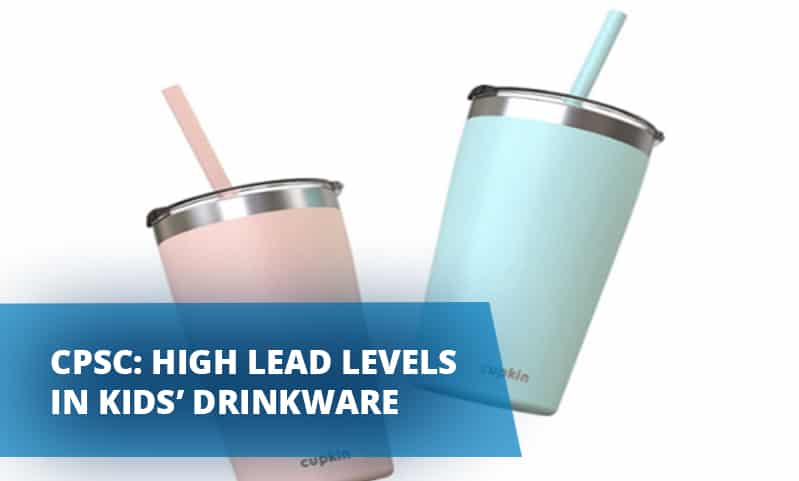
Over a quarter million Cupkin childrens’ cups “contain levels of lead that exceed the federal lead content ban,” according to the Consumer Product Safety Commission.
The recalled 8- and 12-ounce cups, which were manufactured in China, were sold online at Amazon.com and Cupkin.com from January 2018 through March 2023 for about $20, according to the CPSC. “Consumers should immediately take the cups away from children and stop using them,” the agency said.
“After recently receiving feedback from consumer advocates and additional follow up testing, we discovered that the double walled vacuum 8oz and 12oz cups may pose an unacceptable exposure to lead if the cup bottoms are mistreated,” Cupkin, a division of Soojimus, said on its website. “Liquids in the cup are not exposed to lead due to the double walled construction of our cups. We will take this opportunity to completely redesign our cups to make them even better.”
Lead Uses and Effects of Lead Poisoning
Despite the health hazards, lead is widely used throughout the world, mostly because it’s cheap and effective.
The source mineral, galena, is one of the most plentiful minerals in the world. Additionally, smelters produce about half of the lead used in the world. Melting down old pipes and scrap batteries is even cheaper than processing galena.
Furthermore, lead is extremely anti-corrosive and very easy to work with. One expert called it “the plastic of the ancient world.” Later, manufacturers found even more lead uses, since the metal was easy to melt down, shape, and even roll into tubes.
Lead’s low cost made it very attractive to producers, but society paid a high price for its use, mostly in the form of childhood developmental delays.
Eventually, the price became too high. In the 1970s, about 90 percent of kids were exposed to high lead levels. Forty years later, the proportion was down to about 1 percent.
The United States strictly regulates lead in batteries, and about 90 percent of lead used today is for this purpose. Other governments, however, don’t care as much about lead in batteries or other products.
Your Legal Options
Safety recalls prevent dangerous products from hurting more people. But these recalls do nothing to compensate victims.
Launching a legal action against Soojimus or another foreign-owned corporation is usually not difficult. Most foreign companies maintain registered agents in most states. These agents are authorized to accept legal papers.
After that, things become more difficult. In 2021’s Ford Motor Co. v. Montana Eight Judicial Dist. Court, the Supreme Court sharply limited a state court’s power to exercise jurisdiction over a foreign defendant. Furthermore, there’s the sheer logistical complexity of working with lawyers on the other side of the world.
Legal action against the retailer is usually another option. Generally, retailers have a duty to sell safe products to customers and warn them about any dangerous defects or side-effects. For a free consultation with an experienced Napoli Shkolnik attorney, contact us today.