
 (844) 230-7676
 Language


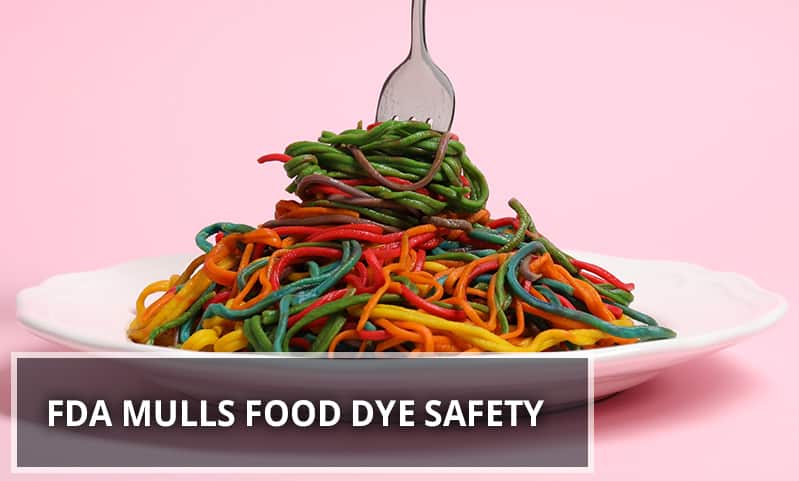
California officials recently banned a dangerous food ingredient, red dye no. 3, that has caused cancer in laboratory animals and hyperactivity in human children. The Food and Drug Administration may follow suit.
California became the first state to ban four food additives, including red No. 3, and public health advocates are pushing to remove the dye from the food supply nationwide. “I think the passage of the bill in California creates undeniable pressure on the FDA,” says Dr. Peter Lurie, president and executive director of the Center for Science in the Public Interest.
His group, joined by other consumer advocacy groups including Public Interest Research Group and Consumer Federation of America, filed a petition last October with the FDA to ban the use of red No. 3. Lurie says he thinks the action in California will “make it more likely that they grant our petition.”
When California’s Environmental Protection Agency reviewed the body of evidence on synthetic dyes, they found evidence the dyes consumed in food can negatively impact children’s behavior. Out of about 25 studies, more than half identified a positive association between artificial food coloring intake and behavioral outcomes.
They also reviewed dietary survey data and found a higher intake of synthetic dyes in lower income communities. “We also found Black Americans tended to have higher intake,” says Asa Bradman, a public health scientist at the University of California, Merced, who helped with the state’s analysis.
“The vibrant colors are important to our industry,” says Christopher Gindlesperger, of the National Confectioners Association, a trade group that includes companies that make candy. He says the FDA should use its regulatory authority to settle the issue of whether red 3 can continue to be used in food. In a letter to the FDA, the organization said that California was “out of its depths when it comes to national food safety standards.”
FDA Authority
Congress established the Food and Drug Administration in 1906. Back then, anyone could sell anything for any reason. In 1898, Bayer sold heroin, marketing it as a children’s cough suppressant.
To stop such practices, Congress gave the FDA broad authority to ensure food and drug safety. Subsequent generations of lawmakers whittled away at these powers. Today, the FDA is little more than an advisory board.
Over the years, lawmakers have also reduced the FDA’s budget. Yet lawmakers haven’t significantly reduced the FDA’s inspection responsibilities. So, today’s FDA largely depends on user fees. Quite simply, the more products that regulated industries sell, the more user fees they pay, and the more money the FDA makes.
Today, an FDA “recall” is not a unilateral recall. Usually, officials can publicly pressure companies to voluntarily recall dangerous products, but that’s about it.
Recalls do nothing to compensate the victims of dangerous food additives and other dangerous products.
Food Poisoning Issues
Food additives are usually designed to make food taste better, last longer, or appear more eye-catching. They usually aren’t designed to make food healthier. In fact, many food additives contain highly toxic chemicals. These toxins alter cell chemistry, causing various long-term, serious illnesses.
Sometimes, food becomes tainted during the manufacturing process. Unsanitary conditions at a processing plant are a main cause. If listeria or another bacteria contaminates food, the company might reluctantly recall certain lots. But the company almost never goes the extra mile, determines the source of the contamination, and deals with that source.
Generally, manufacturers are strictly liable for the injuries that a design or manufacturing defect causes.
Your Claim for Damages
Dangerous food additive and other mass tort claims usually fall under multidistrict litigation jurisdiction. An attorney needs a special skill set to successfully resolve these claims.
Procedurally, MDL is essentially a hybrid between class-action claims and individual lawsuits. Authorities consolidate these matters for pretrial purposes, including pretrial motions and discovery. A single judge presides over these matters, ensuring consistent results for all plaintiffs and defendants.
This judge also presides over a handful of bellwether trials. Each side tests its claims and defenses before a live, studio audience.
Most claims settle at this point. In the unlikely event the case doesn’t settle, the MDL judge sends it back to its home jurisdiction for trial.
MDL claims have a lot of moving parts. Attorneys must know how to deal with these additional complexities. Furthermore, courts usually consolidate these cases in remote locations. An attorney must have sufficient resources to travel to and from hearings and enough experience to know the special procedural rules.
Dangerous food additives cause serious injuries. For a free consultation contact Napoli Shkolnik.