
 (844) 230-7676
 Idioma

By: shayna sacos, Partner, Napoli Shkolnik
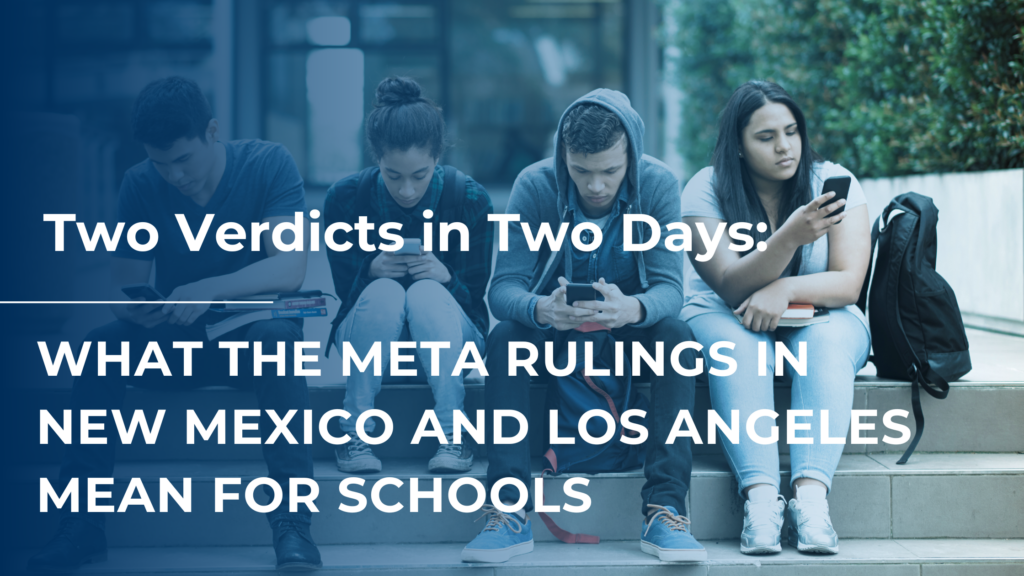
This week, in the span of two days, juries handed down two landmark verdicts against Meta. Together, they represent the most significant legal accountability these platforms have faced over the harm they have caused to children. For the school districts Napoli Shkolnik represents, they are exactly the validation the litigation has been building toward.
New Mexico: $375 Million and a Finding of Willful Deception
On March 24, a Santa Fe jury found Meta liable on every count in a lawsuit brought by New Mexico Attorney General Raul Torrez. The jury concluded that Meta willfully violated the state’s consumer protection law by misleading users about the safety of Facebook, Instagram, and WhatsApp and by failing to protect children from sexual predators on its platforms. They have been ordered to pay $375 million in damages as part of the verdict.
This is one of the first times a state has successfully taken Meta to trial over child safety and won. The jury found that Meta’s own choices, including how it designed its platforms, what it knew about exploitation, and what it chose not to tell the public, were the basis for liability.
Internal documents introduced at trial showed that Meta employees raised concerns about child sexual exploitation, including communications showing the company understood that encryption features would shield the transmission of child sexual abuse material from law enforcement. The company moved forward anyway.
The second phase of the New Mexico case begins May 4, when a judge will determine whether Meta must also fund public programs to address the harm its platforms caused.
Los Angeles: A Jury Finds Platform Design Was the Harm
The very next day, a Los Angeles jury in the JCCP, or the Judicial Council Coordinated Proceeding, a state court mechanism that consolidates similar cases, found Meta and YouTube negligent. They were ordered to pay $4.2 million and $1.8 million respectively in combined compensatory and punitive damages to the now-20-year-old plaintiff whose social media use, beginning at age 10, led to anxiety, depression, self-harm, and body dysmorphia. TikTok and Snap had already settled before trial.
This case was the first individual-plaintiff trial in the broader JCCP proceedings. The jury found that both companies knew their platform designs were dangerous, that users would not realize the danger, and that the companies failed to warn users when a reasonable platform would have. The plaintiffs’ theory, which centered on how the platforms were built rather than what users posted on them, successfully navigated around Section 230 immunity.
What This Means for Our School District Clients
The legal theory our school district clients rely on runs parallel to both of these verdicts. We are not arguing that social media companies are responsible for what individual users post. We are arguing that these platforms were designed to maximize engagement at the expense of children’s wellbeing, that the companies knew it, and that schools have absorbed enormous real costs as a result related to counseling resources, special education referrals, administrator time, and the daily human toll of a student population in crisis.
This week’s verdicts validate that framework at both the state government and individual-plaintiff level. They establish that juries, when presented with the evidence, are willing to hold these companies accountable for their design choices. They also demonstrate that Section 230 is not an impenetrable shield when the harm being alleged is the product’s own architecture.
The platforms have maintained for years that they are neutral intermediaries. Two juries in two days rejected that argument. The litigation continues, and Napoli Shkolnik will be at the table.