
 (844) 230-7676
 Idioma


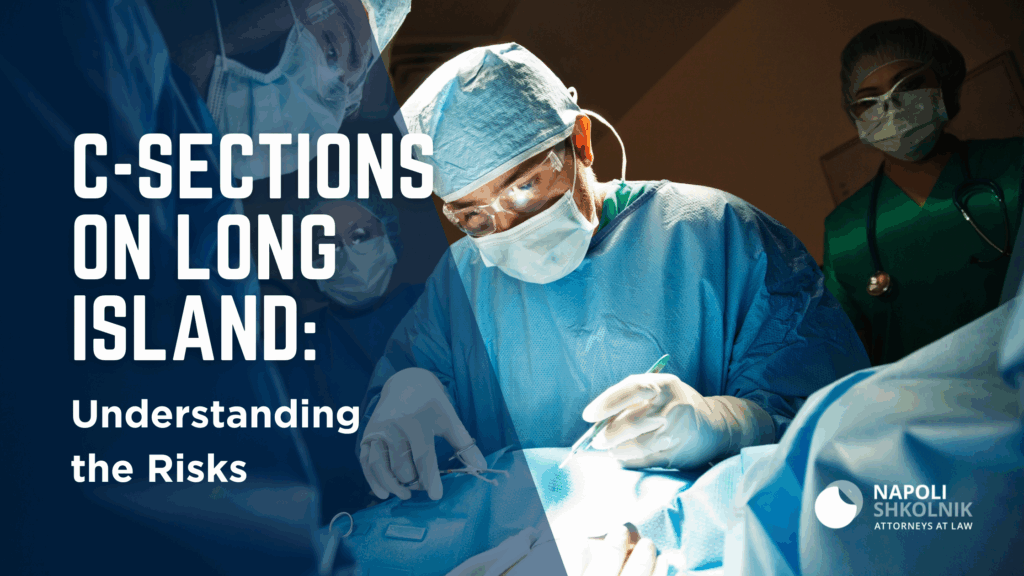
A recent noticiario investigation shows that Long Island hospitals perform cesarean sections (C-sections) at higher rates than elsewhere in New York, even in low-risk pregnancies. While C-sections can be lifesaving in true emergencies, health experts warn that unnecessary surgery exposes mothers and babies to serious medical risks that often go under-discussed.
A cesarean section is not just another way to deliver a baby—it is one of the most significant operations a woman can undergo. The procedure involves incisions through the abdominal wall and uterus. Because it is surgery, the risk of complications is higher than with vaginal birth.
Common complications for mothers include:
- Infections: Higher rates of uterine and wound infections.
- Blood clots: Greater risk of deep vein thrombosis and pulmonary embolism.
- Excessive blood loss: Hemorrhage risk rises, sometimes requiring transfusions.
- Future pregnancy risks: Elevated chances of placenta previa, placenta accreta, and uterine rupture.
- Difficult recovery: Pain, mobility limits, and challenges caring for a newborn often last weeks.
Babies delivered by C-section can also face breathing problems and, when delivered early, higher rates of neonatal complications.
For many women, an unexpected C-section is emotionally taxing. Mothers may feel grief when a planned vaginal birth turns into surgery. Recovery can be harder physically and mentally, affecting bonding during the newborn stage. The cost is also substantially higher than vaginal delivery, adding financial stress.
Another element fueling higher rates is fear of litigation. Obstetricians know that in malpractice cases involving complicated vaginal births, the common refrain is: “Why wasn’t a C-section done sooner?” This pressure can make physicians more likely to recommend surgery—even when medical necessity is unclear.
Legal concerns have been one of the driving forces behind the national rise in C-sections since the 1970s. While lawsuits can ensure accountability in cases of genuine negligence, the unintended consequence is a culture where defensive medicine prevails. That environment may push women toward surgery they neither want nor medically need.
Some hospitals do handle more complex cases, which naturally increases C-section numbers. But when nearly half of all “low-risk” births at one Long Island hospital end in surgery, it raises important questions about consistency and medical judgment. Training, hospital culture, and legal fears all play a role.
The Bottom Line:
C-sections save lives every day, but they are not without consequence. For most low-risk pregnancies, vaginal birth is safer for mothers and babies. By understanding both the medical risks and the legal pressures shaping physician decisions, expecting families can prepare themselves to advocate for safe, thoughtful, and informed care.