
 (844) 230-7676
 Language


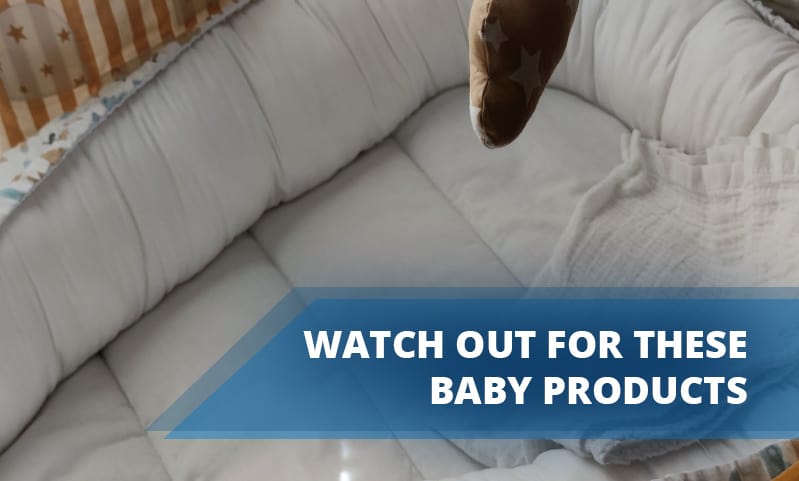
Since they fall short of federal safety guidelines in several areas, the Consumer Product Safety Commission advises caregivers to immediately stop using Gorsetle baby loungers.
The loungers fail to meet the safety requirements of the CPSC’s Infant Sleep Products Rule because they do not have a stand. In addition, the loungers fail to meet the markings, labeling, and instructional literature requirements. These failures create an unsafe sleeping environment for infants. The lounger and its packaging also lack a tracking label containing required information, including the date of manufacture. Due to the extreme risk, the CPSC urges all sellers and customers to immediately stop sale or use of non-compliant infant sleep products regardless of the date of manufacture.
So far, the company is not cooperating with the CPSC’s recall request.
Common Product-Related Infant Injuries
Poorly designed or made products can hurt anyone, especially if the manufacturer refuses to warn customers about possible dangers. Even well-made products, however, can hurt vulnerable babies. That’s especially true if the manufacturer doesn’t warn caregivers about the risks. Some common childhood product-related injuries include:
- Head Injuries: Defective or dangerous playground equipment often causes head injuries, almost half of which are serious or catastrophic (life-threatening). Children under two who fall more than three feet and children under seven who fall more than five feet usually sustain concussions.
- Eye Injuries: These wounds are often connected to head injuries. Red flags include two head injury-related black eyes and persistent sudden vision changes, like seeing double or blurred vision. Difficulty moving an eye (“follow my finger”) could indicate more significant trauma or a serious infection.
- Fractures: Caregivers should look for the five Ps: pain, pallor, pulse, paresthesia (numbness), and paralysis. Also look for swelling at the site of the injury, deformity, and reluctance to use that body part. If the fracture doesn’t heal right, the injury is permanent.
Older playgrounds are especially dangerous for children. The equipment is often worn out and usually built over a hard surface.
Young children could fall out of a Gorsetle baby lounger and sustain one or more of the aforementioned injuries. These products also don’t effectively hold children in place, so there’s a chance they could roll over and suffocate.
If a manufactured product causes injury, a personal injury lawyer can usually obtain compensation for these injuries, as outlined below. This compensation usually includes money for economic losses, such as medical bills, and noneconomic losses, such as pain and suffering. Additional punitive damages might be available as well, in some extreme cases.
If one product, like an infant swing or stroller, causes multiple injuries, courts often consolidate these cases into a class action or multidistrict litigation matter.
Elements of a Negligence Claim
Failure to warn is the most common product-related injury claim. Many companies know about harmful side-effects but continue selling the product as is. Legally, a negligence claim has four basic elements:
- Duty: The duty of care is based on the story of the Good Samaritan. Just like this man went out of his way to help an injured traveler, companies must go out of their way to prevent product-related injuries.
- Breach: The degree of breach is analogous to the speed limit; one mile per hour over isn’t very dangerous, but 10 is. Similarly, a personal injury attorney can demonstrate the degree to which a product has violated the standard of care.
- Damage: Physical wounds can cause emotional wounds. Compensation is available for both. Under a separate legal theory, caregivers of the injured might be eligible for compensation due to their own pain and suffering.
- Cause: To obtain compensation, a personal injury lawyer must connect the breach with the damages. Additionally, the injury must be foreseeable (possible), from the tortfeasor’s (negligent actor’s) perspective. A hospital infection usually isn’t a foreseeable injury.
Other options in these cases include strict liability and public nuisance. Usually, companies are strictly liable for the injuries their defective products cause. A public nuisance is a single product that harms many people at the same time.
Product Recalls and Legal Actions
Normally, companies cooperate when a government agency asks them to stop selling a dangerous product.
It helps ensure that additional people don’t get hurt, but it does nothing to compensate injury victims. Only a personal injury action does that. Additionally, because of the aforementioned punitive damages, legal actions usually force companies to mend their ways.
Serious dangers lurk everywhere for vulnerable babies and unsuspecting caregivers. For a free consultation with an experienced personal injury lawyer, contact Napoli Shkolnik. We handle these claims with no upfront fees and only recover a fee when we win your case.