
 (844) 230-7676
 Language


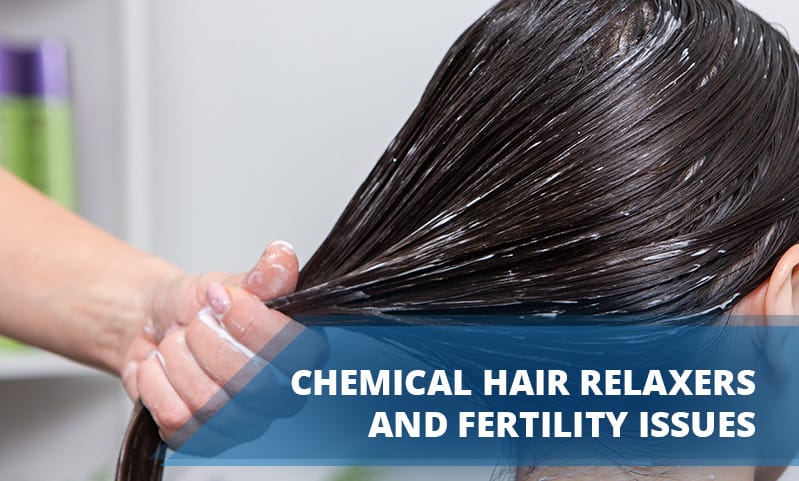
Researchers have already linked chemicals found in hair relaxers to several health issues. Now, fertility joins that list. According to the latest studies, participants who used hair relaxers for at least 10 years, or at least five times per year, had the lowest fertility rates. Phthalates, phenols, and parabens are a few of the chemicals in relaxers that may contribute to reduced fertility, the researchers said. They cautioned that the full set of ingredients is rarely included on product labels. “Our work underscores the importance of expanding research on the reproductive health effects of beauty product use to promote environmental justice and increase health equity,” study lead author Lauren Wise, a professor of epidemiology at Boston University’s School of Public Health, said in a statement.
Chemical Relaxers
Parabens, which often aren’t included on product labels, might be the most concerning chemical ingredient in hair relaxers. Many cosmetic makers used parabens as the primary preservative. Researchers believe that parabens inhibit the membrane transport process, making them excellent antibacterial agents. This same process also interrupts RNA and DNA synthesis. The body may be able to tolerate low paraben levels in makeup and other products, but it can’t tolerate the high paraben levels in chemical hair relaxers. Some people have severe allergic reactions to parabens. These substances also frequently cause chemical burns. As for long-term ill health effects, they include:
- Breast Cancer: According to the American Cancer Society, parabens don’t elevate the risk of breast cancer as much as smoking, obesity, and some other risk factors. But parabens still elevate the risk.
- Estrogen/Hormone Issues: Parabens are chemically similar to estrogen and many other hormones. As a result, the body doesn’t naturally produce as many hormones. When the person stops using the chemical hair relaxer, the body’s hormone production usually doesn’t adjust to that change.
- Low Birth Weight: N-butylparaben, a specific kind of paraben that’s especially common in chemical hair relaxers, has been linked to decreased birth size of female babies.
- Fertility Issues: According to several studies, urinary propylparaben shortens the female menstrual cycle, creating fertility issues. Moreover, high butylparaben levels in the mother’s urine and levels in cord blood were associated with increased odds of preterm birth.
Parabens also harm our environment. Even low butylparaben levels kill coral, according to laboratory tests. Parabens have been detected in surface waters, fish, and sediments. Furthermore, when parabens are combined with chlorinated tap water, a number of chlorinated paraben byproducts form. Due to these and other issues, the European Union banned isobutylparaben, phenylparaben, isopropylparaben, benzylparaben, and pentylparaben in 2014.
Your Legal Options
As mentioned, many cosmetics companies don’t list all ingredients on hair relaxer labels, and they certainly don’t warn consumers about their risks. Legally, companies have a duty not only to list all product ingredients, but also warn consumers about the possible side-effects of these ingredients. Furthermore, these warnings must be proportional to the danger they pose. If a company breaches its duty of care, a skilled and knowledgeable attorney can obtain compensation for damages. This compensation usually includes money for economic losses, such as medical bills, and noneconomic losses, such as pain and suffering. Additional punitive damages are often available in these matters as well. Frequently, companies bury negative product information so people will keep buying the product. In other words, the company intentionally disregards a known risk. Other legal options include a defective product claim and public nuisance. Companies are strictly liable for the injuries their defective products cause. Attorneys often turn to public nuisance if a consumer or other product injured thousands of people at once. Most opioid injury claims are public nuisance claims. Injury victims are entitled to substantial compensation. For a free consultation with an experienced attorney, contact Napoli Shkolnik. We have offices nationwide.